
Decoding nature’s peptides to design the medicines of tomorrow
Understanding the human genetic variations in our peptides and hormones can give us a better understanding of drug binding and create new data for future drug discovery.
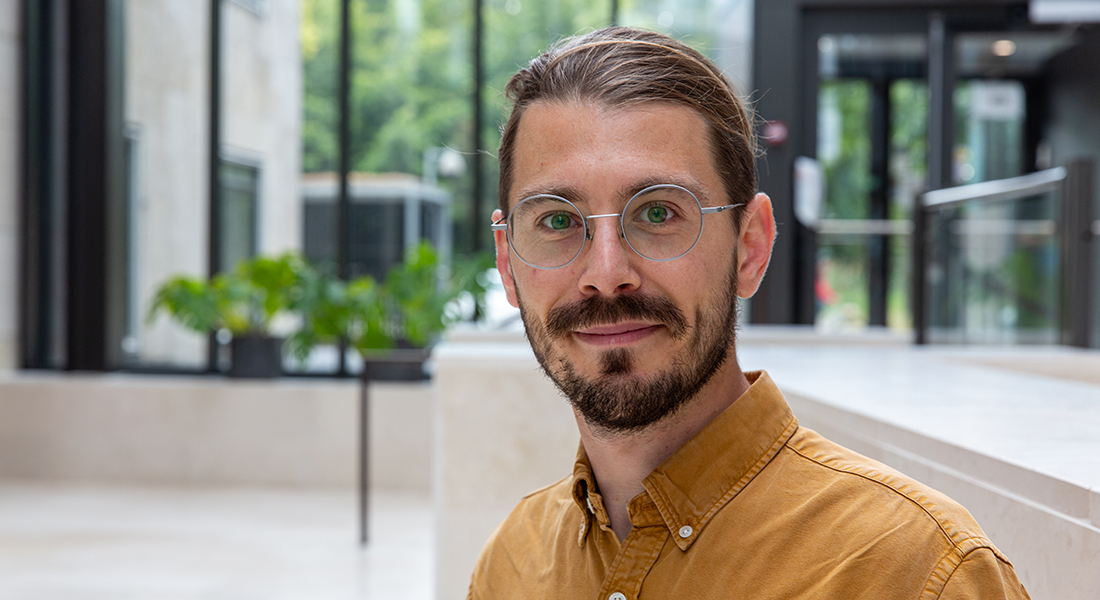
Associate Professor Alexander Hauser has received 11,2 DKK mill from the ERC as an ERC Starting Grant to investigate this with the project “DARK-PEP. Mapping the Human Peptidome: Genetic Variability and GPCR Signaling”.
Our different molecular landscapes: using human variation to guide peptide design
Up until now, Alexander Hauser has worked with pharmacogenomics, personalized medicine, bioactive peptide predictions, and the molecular pharmacology of G protein-coupled receptors: -this new project combines that.
Alexander Hauser describes the overall perspective of the project: “We are all different in our genetics: just as our hair and eye colours are different because of genetics, so are the molecular landscapes of our bodies. Small genetic differences can change how our peptides and receptors interact and signal. By understanding these natural variations, we can learn which molecular features matter most for peptide–receptor interactions and use this knowledge to guide the design of new peptides.”
Alexander has previously studied how genetic variants identified from human genome sequencing can change the function of receptors and help explain differences in human physiology and drug response. He has also worked with computational models such as AlphaFold to investigate whether they can predict protein interactions, and particularly interactions between peptides and their receptors.
“Just as our receptors can differ genetically, so can the hormones that bind to them”, he explains. “So, my oxytocin or my GLP-1 can be slightly different from yours. This variation in human hormones has received relatively little attention. One reason is that the large-scale sequencing datasets needed to systematically identify these rare amino acid changes have only become available relatively recently”.
“With this grant, I want to understand how subtle differences in hormones affect their interactions with receptors but also explore the enormous diversity of peptides found across all domains of life to discover entirely new receptor – peptide interactions. We will develop a new experimental method in the lab to measure these interactions at much larger scale and generate the data needed to improve computational models for predicting and ultimately designing peptides.”
Current computational models have made remarkable progress in predicting molecular structures and interactions but predicting how changes in a peptide affect its interaction with a receptor remains challenging. By combining large-scale experimental measurements with computational modelling, the project aims to uncover the principles that determine peptide – receptor interactions and ultimately use them to guide the design of new peptides.
The project work will be conducted both in his laboratory in the MolPharm section and ,on the computational side, at the Center for Pharmaceutical Data Science (CPDSE). Alexander Hauser envisions hiring four post docs and/ or PhD’s.